30 tips on stamping die design and technology, all of which are classics!
2019-08-19
1. Before designing the material strip, you must understand the tolerance requirements of the parts, material properties, punch tonnage, punch table, SPM (punches per minute), feeding direction, feeding height, mold thickness requirements, material utilization, and mold service life.
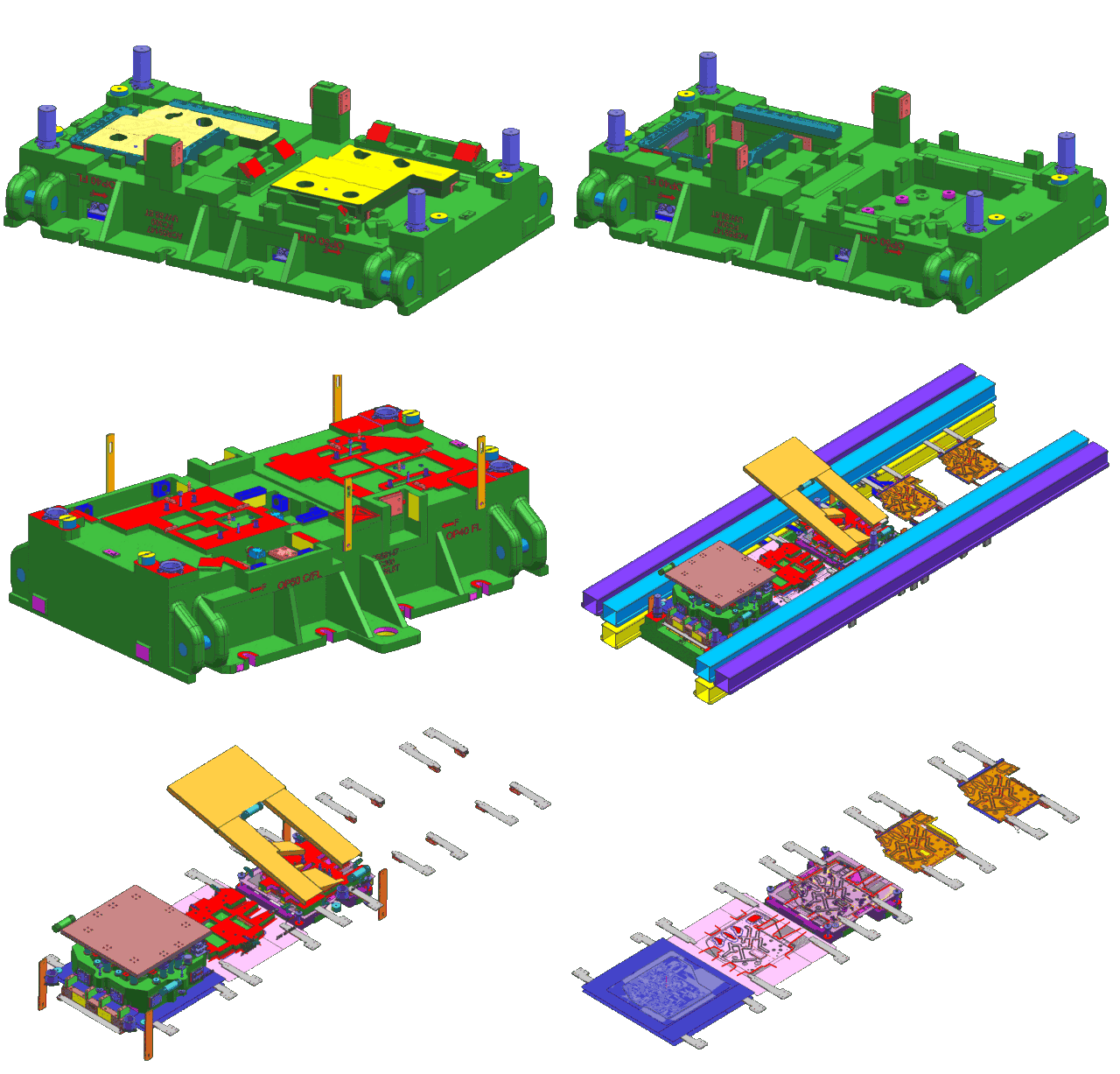
2. When designing the material strip, CAE analysis should be performed at the same time, mainly considering the thinning rate of the material, which should generally be below 25%. Especially for deep-drawn stainless steel materials, annealing can be performed after pre-stretching. With a high-frequency annealing machine, the thinning rate can be accepted up to 40%. When designing the material strip, it is necessary to communicate more with the customer. It is best to ask the customer to provide the previous mold photos or structure drawings for reference. The empty step is also very important. If the mold length allows, leaving an appropriate empty step is very helpful for the mold modification after the trial mold.
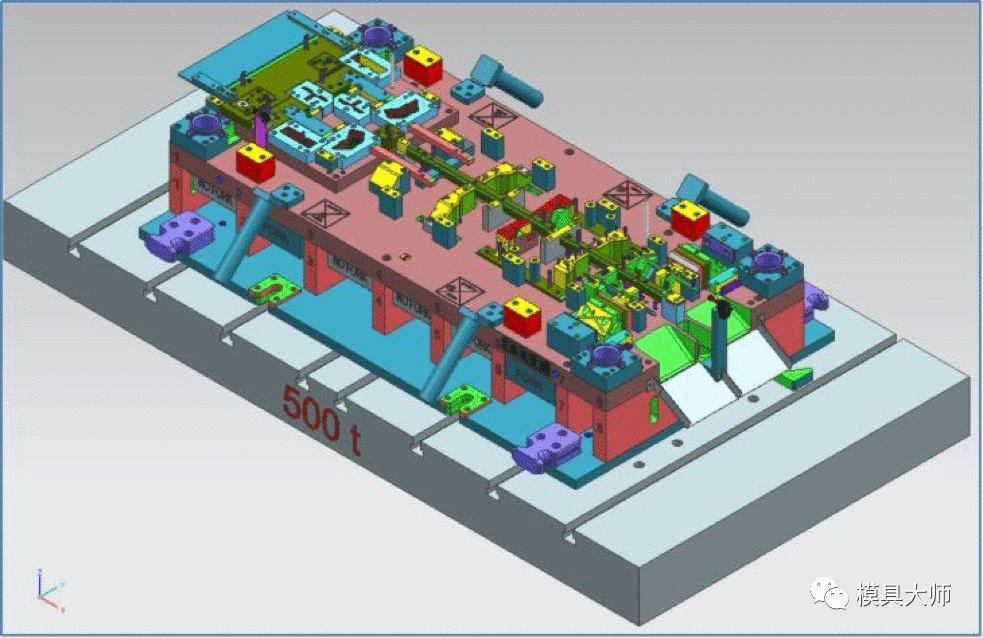
3. Strip design is an analysis of the product molding process, which basically determines whether the mold is successful.
4. When designing continuous molds, the material lifting design is very important. If the lifting rod cannot lift the entire material strip, automated continuous production cannot be carried out.
5. In mold design, the selection of mold materials, heat treatment and surface treatment (such as TD, TICN, TD takes 3-4 days), especially for drawn parts. If there is no TD, the mold surface will easily burn and fuzz.
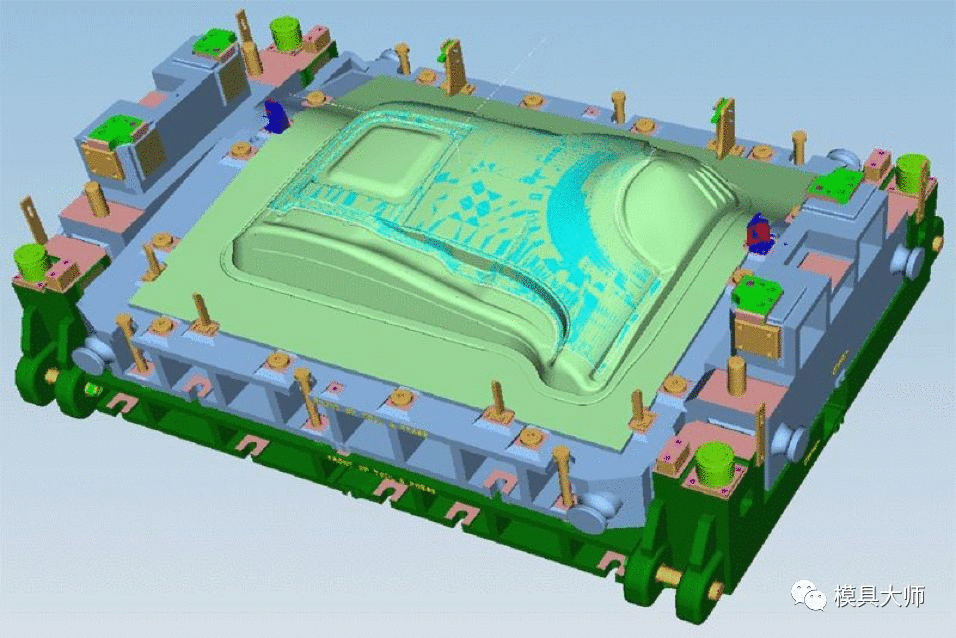
6. In mold design, for holes or surfaces with smaller tolerance requirements, try to make adjustable inserts to facilitate adjustment during mold trial and production, so as to easily meet the size requirements of the parts. Adjustable inserts should be made for the upper and lower molds at the same time. For word marks, they should be removable on the punch press, without wasting time by removing the lower mold.
7. When designing hydrogen springs, design according to the pressure analyzed by CAE. Do not design hydrogen springs that are too large to prevent product rupture. Usually, the product wrinkles when the pressure is small and ruptures when the pressure is large. To solve the wrinkling of the product, you can use the method of adding drawbeads locally, first fix the sheet with drawbeads, and then stretch it to reduce wrinkling.
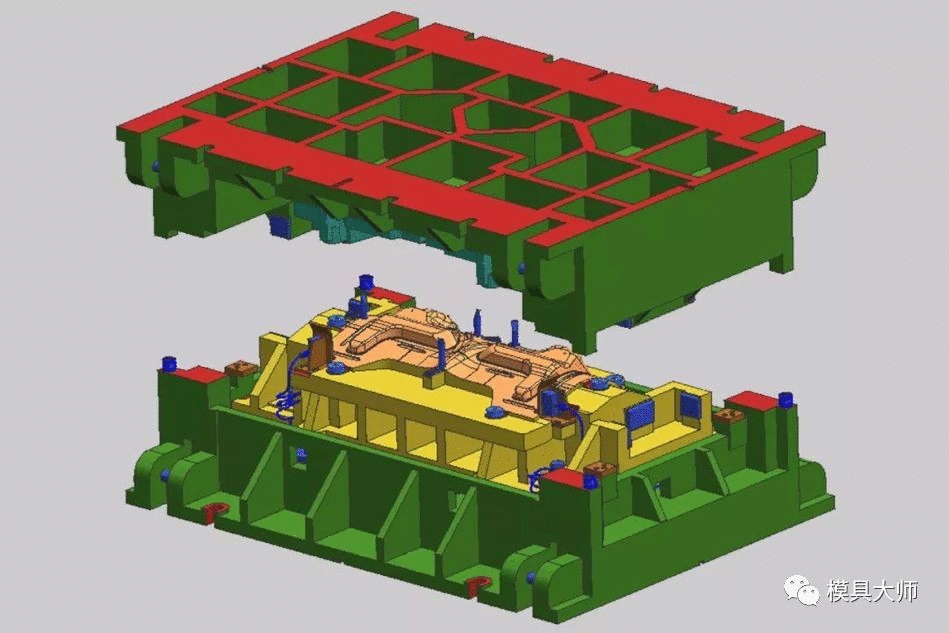
8. When testing the mold for the first time, be sure to slowly close the upper mold. For stretching processes, be sure to use a fuse to test the material thickness. Test the mold after the material gap reaches the material thickness. The knife edge must be aligned first. Please use movable inserts for drawbeads to facilitate the adjustment of the drawbead height.
9. When testing the mold, the reference holes and reference surfaces must be measured after the mold is assembled, and then the product is placed on the inspection fixture for measurement, or sent to CMM for a 3D report, otherwise it is meaningless.
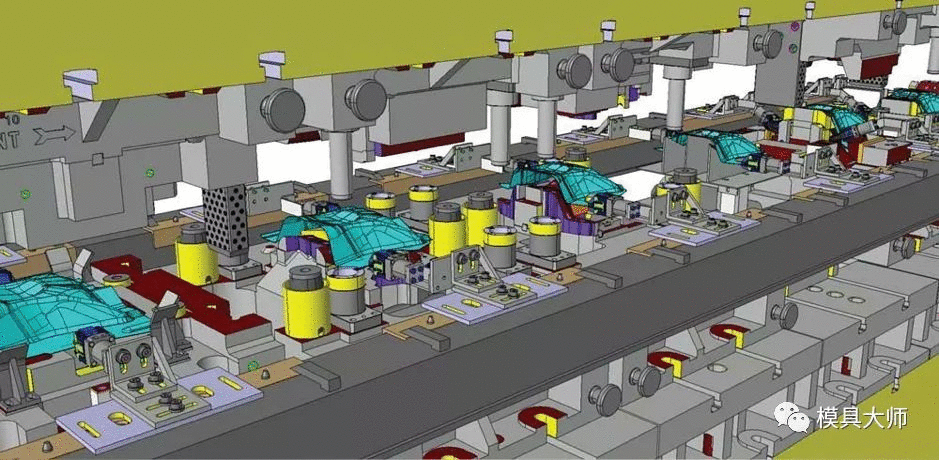
10. The red lead must be matched well, and the fitting rate must reach more than 80% before the cut can be made and the CMM report can be made. Or, if the reference hole and reference surface have been matched well and the product is very stable and tight, the fitting rate can be appropriately reduced. Matching red lead is very important, otherwise the product will be unstable, and the later mold modification judgment cannot be carried out, and the part size will not meet customer requirements.
11. Customer sample requirements: Generally, it starts with laser prototyping → notching → 100% OK. In the laser prototyping stage, the red lead should be prepared, the feeding should be adjusted, and the problems of cracking, wrinkling and dimensional tolerance should be solved. When notching, the main problems are basically corrected, and then fine-tuning (partial improvement of the mold) is performed.
12. If the customer insists on cutting but the process conditions are not mature, you can consider opening the edge with soft material (that is, directly use 45 steel to open the edge, directly weld when changing the cut, and then open the formal hard material edge after the size is OK).
13. For complex 3D products, 3D laser can be used for laser cutting. Before 3D laser cutting, the 3D graphics must be made, and the reference points must be marked with CNC before sending them to 3D laser cutting. 3D laser cutting also requires positioning sand molds.
14. For high-strength steel plates, the blade material should be made of cemented carbide materials such as A88 or V4.
15. When testing the mold, in order to test the stretching effect, sandpaper can be placed at different positions on the material to test the effect. After confirming the effect, active draw ribs or active pockmarks (that is, grinding a plated part into pockmarks) can be placed at the corresponding positions to create friction and hinder material movement.
16. For parts with more bends, the bending should be adjusted step by step according to the process when adjusting the mold.
17. When adjusting the forming angle, you can reduce the R angle during bending or move the folding line reference to achieve the purpose of the forming angle.
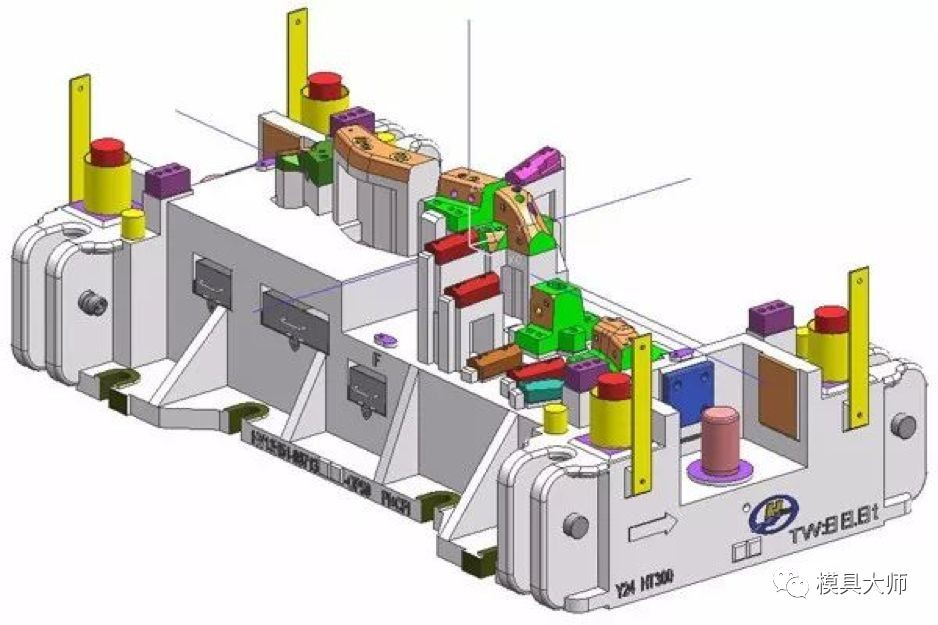
18. When adjusting the mold, most of the time, gaskets are used to adjust the height of the molding male, or to move the molding male part left, right, front, and back. Gaskets are generally made of stainless steel hard sheets. (If the customer does not allow the use of gaskets, wait until the mold is adjusted before making a new workpiece for the customer)
19. For molded parts made of stainless steel, TD cannot be used. Instead, (TICN) or PVD must be used.
20. Make sure when the customer's official materials will arrive, and use materials economically during the mold trial to avoid insufficient materials.
21. There are two types of sensors for continuous molds, one is the step sensor and the other is the blanking sensor.
22. The slope of the waste funnel should be no less than 30 degrees. For low-angle waste boxes (Scope boxes), a pneumatic vibration can be installed to solve the problem.
23. For the trimming lines affected by molding, it is necessary to choose to trim after molding. Cross-cutting can be used to achieve special positions.
24. For multiple reference holes, it is best to use a one-time punching method to avoid affecting the accuracy after step-by-step punching.
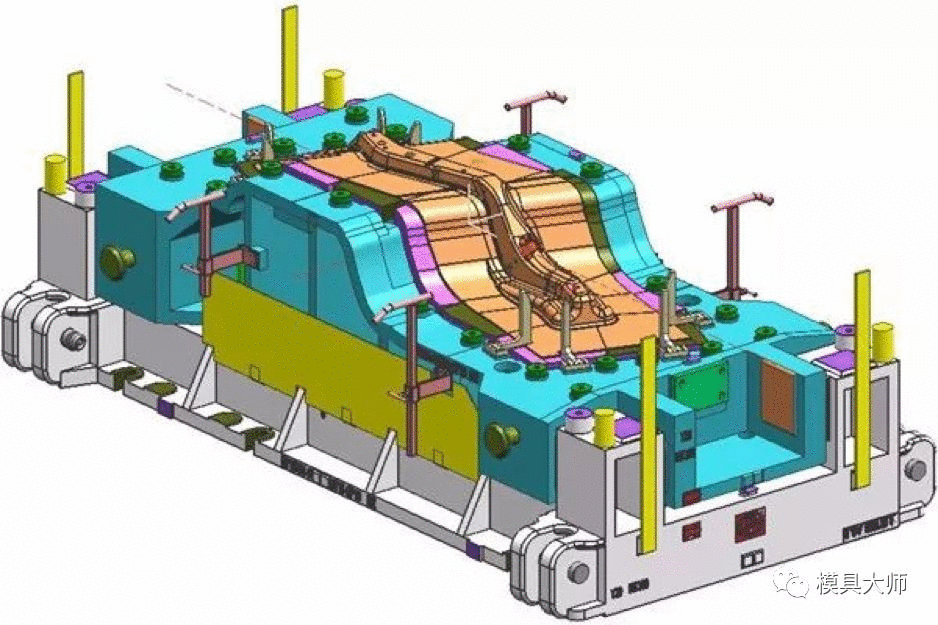
25. For mold trial analysis, it is necessary to analyze the material strip after the mold trial and analyze each process step by step, and the red lead material strip must be attached.
26. To prevent product rupture, you can adopt various methods such as adding packages, squeezing materials, increasing the sheet rod forming area, opening holes, etc. during the initial stretching. CAE analysis should be carried out before changing the mold.
27. Product materials are divided into two types: coil and sheet. Some coils need to be slit again to the width of the material strip after arriving at the factory. Usually, the size is a negative tolerance (minus 0.5mm) when slitting, and the inner diameter of the coil must conform to the size of the feed rack to avoid being too large, too small, or too heavy.

28. When processing molds, the pin holes of wire cutting are usually used as the reference for the number of collisions. After programming, the CNC operator needs to give the coordinates of the two holes to the programmer, who will calculate the angle and then adjust the program to an angle before processing. Usually, when processing the template for the first time, it is edge processing without calculating the angle.
29. The concept of fine blanking is to leave no blanking gap (or only 0.5%). Generally, the blanking gap is 10% of the material thickness. The thicker the material, the larger the gap ratio.

30. If the size of the hardware sample does not meet the requirements, it can be achieved through shaping, including plum blossom pile, flattening again, simple punching, etc.
The above is a summary of some experience in actual stamping work. I hope it will be helpful to those who read this article, improve the on-time qualification rate of the mold, and reduce the number of mold trials.
Next:This is the last one
Prev:This is the first article